The Typeface That Actually Delivers on Its Promise
You know that feeling when you're scrolling through font libraries at 2 AM, desperately searching for something that doesn't look too trendy, too boring, too quirky, or too corporate? I've been there more times than I'd like to admit. After years of working on branding projects, editorial spreads, and digital campaigns, I've developed a pretty strong opinion about what makes a typeface genuinely useful versus merely decorative. Perfect Font landed on my radar a few months ago, and honestly, I was skeptical. The name felt like it was asking for trouble. But after using it across multiple client projects and personal work, I understand why it earned that bold title.
What Makes This Typeface Stand Out in a Crowded Market
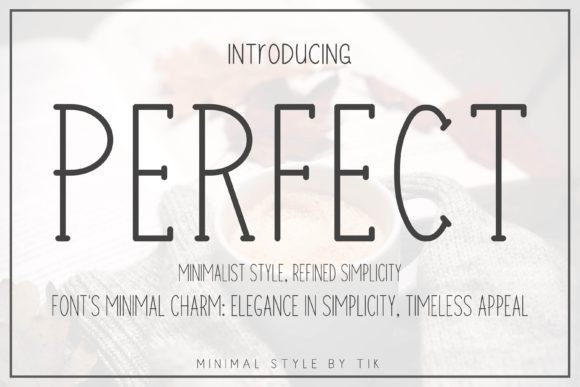
Let's get specific about what you're actually looking at here. Perfect Font is a versatile and balanced typeface that lives up to its name. With its clean lines and impeccable proportions, this font brings a sense of harmony and aesthetic appeal to any design. The letterforms feel intentional without being rigid. There's a subtle warmth built into the geometry that prevents it from reading as cold or mechanical, which is a trap many modern typefaces fall into.
What struck me first were the curves. They're smooth without being sterile, and the spacing between characters feels naturally calibrated rather than mechanically calculated. When you set a paragraph in this font, the text block has an even color to it — no awkward dark spots where letters bunch together, no airy gaps that pull your eye away from the content. That kind of visual rhythm matters more than most people realize, especially when you're setting body copy for a website or laying out a multi-page document.
The weight range deserves attention too. You're not just getting regular and bold and calling it a day. The full family gives you enough variation to create hierarchy and emphasis without needing to pull in a second typeface for contrast. That alone can simplify your design workflow significantly, particularly if you're a small business owner or solo creator managing your own brand materials.
Where This Font Actually Works in Real Projects
I want to move beyond generic suggestions here, so let me walk through how I've personally used Perfect Font and where I've seen it perform well.
Branding and logo design: When developing a brand identity, you need a typeface that works at multiple scales. I recently used a condensed weight for a boutique skincare company's logo, and it looked just as sharp scaled down on a product label as it did blown up on a trade show banner. The character shapes hold their integrity across sizes, which isn't something every premium font can claim. If you're building a brand from scratch, starting with a typeface that carries this kind of flexibility saves you from having to swap fonts every time your logo needs to appear somewhere new.
Packaging design: This is where readability under pressure matters. Consumers glance at packaging for maybe two seconds before deciding whether to pick something up. Perfect Font's clear letterforms and balanced proportions mean that ingredient lists, taglines, and product names all remain legible whether printed small on a label or large on a box. I've used it for a coffee roaster's bag design and an artisan candle line, and in both cases, the typography contributed to a polished, shelf-ready appearance.
Social media graphics and digital content: If you create content regularly for Instagram, Pinterest, or LinkedIn, you know the headache of finding fonts that render well across devices and screen resolutions. This typeface holds up beautifully in digital environments. The slightly generous x-height keeps text readable even at smaller sizes, which matters when someone's viewing your infographic on a phone screen. I've built entire social media templates around it for a fitness brand, and the consistency across posts helped establish a recognizable visual identity within weeks.
Editorial layouts and print materials: For magazines, lookbooks, brochures, and reports, Perfect Font brings a refined quality that doesn't distract from the content. It lets photography and illustrations take center stage while still giving the text a distinct personality. I set a 40-page lookbook entirely in this typeface last fall, mixing weights and sizes to create visual interest without introducing competing fonts. The result felt cohesive and intentional — exactly what the client needed.
Websites and blogs: Web typography has come a long way, but choosing the wrong font still creates problems with load times, rendering inconsistencies, and readability fatigue. Perfect Font performs well in web environments because its proportions are optimized for on-screen reading. The letter spacing doesn't collapse at smaller sizes, and the contrast between weights is clear enough to establish hierarchy without feeling heavy. Whether you're designing a landing page or setting up a blog theme, this typeface adapts smoothly.
Invitations, merchandise, and creative projects: Beyond commercial applications, I've seen crafters and hobbyists gravitate toward this font for wedding invitations, custom T-shirt designs, and printable wall art. The elegance of the letterforms gives handmade projects a professional finish, which is especially valuable if you sell on Etsy or at local markets. One friend used it for her calligraphy-adjacent wedding suite, pairing a script style for names with the clean regular weight for details, and the combination was stunning.
Getting the Most Out of Your Font Choice
Choosing a typeface is only half the battle. Using it well is where the real work happens. Here are some practical things I've learned about working with Perfect Font specifically and typography in general.
Start with your project goals, not your personal taste. I love expressive display fonts as much as anyone, but if your project demands clarity — a medical brochure, a financial report, a children's educational resource — you need to prioritize readability over personality. Perfect Font works so broadly because it balances both, but you still need to make deliberate choices about which weight and size serve your specific context.
Test font pairings before committing. Even a versatile typeface benefits from a complementary partner. I often pair Perfect Font with a simple sans serif for navigation elements or a subtle script for accent text. The key is contrast without conflict. Set sample text in both fonts at the sizes you'll actually use, print it out if possible, and look at it with fresh eyes the next day. That cooling-off period has saved me from more than a few pairing disasters.
Pay attention to spacing and line height. A beautiful font can still look cramped or sloppy if the leading is too tight or the tracking is off. With Perfect Font, I've found that slightly generous line height — around 1.5 to 1.6 for body text — lets the letterforms breathe and improves readability significantly. For headings, tightening the tracking just a touch can create a more impactful, polished look.
Review the full style range before you start designing. Many people download a font, use the regular weight for everything, and wonder why their layout feels flat. Take thirty minutes to explore every style included in the package. You might discover that a light weight works beautifully for subheadings, or that the medium weight is perfect for pull quotes. Understanding what you have to work with prevents you from reaching for another typeface unnecessarily.
Understand the licensing terms. This is practical advice that too many people skip. If you're using Perfect Font for client work, merchandise, or any commercial application, make sure you have the appropriate license. Most premium fonts come with clear licensing documentation, and respecting those terms protects both you and your clients. It also supports the designers who create these resources, which matters if you care about the quality of future releases.
Why Consistency in Typography Matters More Than You Think
Here's something I wish someone had told me early in my career: your audience notices typography even when they don't realize they're noticing it. Consistent, well-chosen fonts build trust. They signal professionalism. They make your content easier to consume, which means people spend more time with your message. Whether you're a blogger trying to reduce bounce rates, a small business owner designing your own packaging, or a marketer building campaign assets, the typeface you choose becomes part of your brand's voice.
Perfect Font earns its place in a designer's toolkit not because it's flashy or trendy, but because it does its job reliably across contexts. It doesn't fight for attention. It doesn't date your work. It simply communicates clearly and looks good doing it. In a landscape full of novelty fonts that feel exciting for a week and exhausting by month two, there's genuine value in a typeface that you can depend on project after project.
If you're building a brand identity, refreshing your visual materials, or simply looking for a typeface that won't let you down when the deadline is tomorrow morning, this one deserves serious consideration. Set some sample text. Try it in your next mockup. See how it feels in the context of your actual work. Sometimes the best design decisions are the quiet ones — the choices that support everything else without demanding the spotlight.