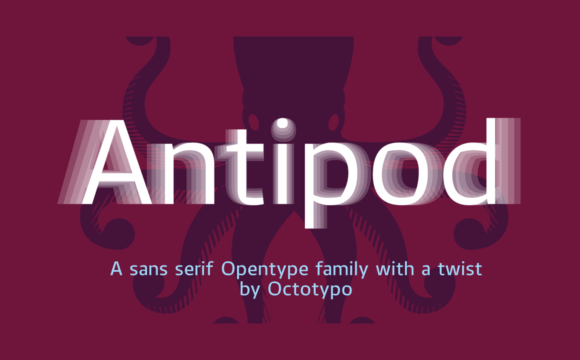
Antipod: A Typeface Where Nib Meets Modern Edge
Every so often, a typeface arrives that doesn't just sit quietly on the page—it makes a statement. Antipod is one of those. Born from the organic flow of a reed pen yet engineered with digital precision, it bridges the gap between handcrafted warmth and contemporary clarity. If you've ever felt caught between a sterile geometric sans-serif and a fussy script, Antipod might be the answer you didn't know you were looking for.
The Craft Behind the Character
What sets Antipod apart starts at its origin. The designer began with a reed pen, sketching letterforms by hand. That process left a fingerprint on every curve and corner. You can see it in the way vertical strokes meet horizontals—there's a subtle junction there, not perfectly mechanical, but not loose either. It's a deliberate balance. The inner corners of letters like "b," "d," or "p" have a sharpness that contrasts with the smoother outer curves, giving the typeface a dynamic tension. It feels alive without being chaotic.
Even at smaller sizes, those details hold. The "type color"—the overall texture and density of a block of text—remains consistent and interesting. That's a big deal for anyone setting body copy for a website or a brochure. You want a font that looks good zoomed in on a logo and still reads cleanly at 11 points in a paragraph. Antipod manages both.
Where Antipod Truly Shines
This is a typeface that leans toward display use. Think headlines, logos, posters, packaging—anywhere you need words to grab attention. But because of its thoughtful construction, it doesn't scream. It persuades. A bold weight of Antipod on a book cover feels authoritative. The lighter weights work beautifully for subheadings or short quotes on social media graphics.
Let's talk specifics. If you're designing a brand identity for a boutique coffee roaster, Antipod's character could mirror the artisanal process—crafted, but not rough. For a tech startup, its modern geometry communicates innovation without feeling cold. On a wedding invitation, a lighter weight adds elegance without the formality of a traditional serif font. It's versatile enough for editorial layouts, signage, merchandise, and digital products like e-books or online courses.
Practical Advice for Using Antipod
Choosing a font is only half the battle. Using it well is where the real work begins. Here are a few things to keep in mind with Antipod—or any premium font you're considering:
- Test at the sizes you'll actually use. Antipod holds up well at small sizes, but always check. Set a paragraph at 14px for web or 10pt for print and read it on screen or paper. Does it feel comfortable? Does the texture feel even?
- Pair it thoughtfully. Antipod is a sans-serif with personality. It pairs well with a clean serif for body text in editorial projects, or with a simple geometric sans for a more minimalist look. Avoid pairing it with another highly distinctive font—two strong voices can clash.
- Explore the full family. Each weight of Antipod includes additional glyphs—think alternate characters, ligatures, or stylistic sets. These aren't just decorative; they can add real individuality to a logo or a headline. Take time to explore what's included.
- Check the language support. If you're working on a multilingual project, Antipod's extended language support is a practical advantage. It also includes tabular figures for financial documents and fractions for recipes or technical specs.
- Understand the license. If you're using Antipod for commercial work—a client logo, a product package, a paid digital download—make sure you have the right license. Most premium fonts require a commercial license for such use. It's a small investment that protects you legally and supports the designers who create these tools.
Beyond the Basics: Building a Visual Language
A font doesn't exist in isolation. It's part of a larger visual system. When you choose Antipod for a project, you're not just picking letters—you're adopting a tone of voice. Its nib-derived origins give it a human touch, which can be powerful for brands that want to feel approachable yet professional.
Consider a small business owner creating packaging for handmade candles. Using Antipod for the product name and details can convey craftsmanship without resorting to a cliché script. A content creator designing Instagram carousels might use a bold weight for key statistics and a regular weight for explanations, creating hierarchy and visual interest without extra graphics.
For web design, Antipod works well for navigation menus, hero text, and calls to action. Its clarity ensures readability, while its character prevents the design from feeling generic. In print, it excels in posters, magazine covers, and report headers where you need impact.
Final Thoughts on Selecting Your Next Typeface
Finding the right creative font is a mix of intuition and practicality. You need something that resonates emotionally with your project's goals and performs technically in your medium. Antipod offers a rare combination: the soul of hand-drawn lettering with the reliability of a well-engineered digital typeface. It's not trying to be everything to everyone—it's a tool with a distinct point of view.
Before committing, download a test version if available. Set a few words in your project's context. See how it feels alongside your images, your colors, your other design assets. Typography is the silent ambassador of your brand; choosing one like Antipod, with its blend of tradition and modernity, might just give your work the voice it was missing.