Marble Font: The Whimsical Typeface for Charming Designs
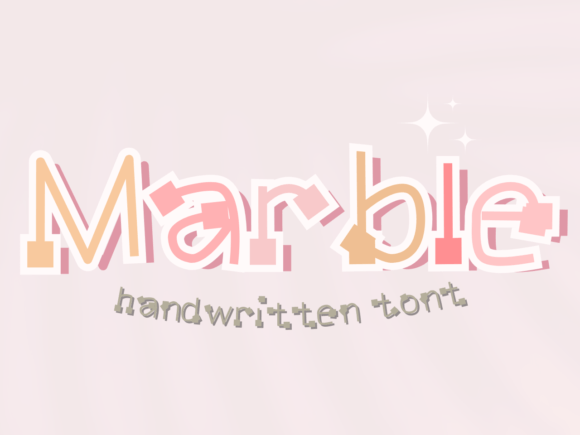
There's a particular kind of design challenge that calls for warmth over formality, for personality over polish. You know the projects—the children's book cover that needs to feel inviting, the artisanal jam label that wants to tell a story, the wedding invitation that should feel personal rather than corporate. These are moments where a typeface like Marble genuinely earns its place in your toolkit. With its distinctive little squares at the terminal ends of each letterform, Marble occupies a sweet spot between playful and purposeful that's surprisingly difficult to find in the world of premium fonts.
Understanding What Makes Marble Work
At first glance, Marble reads as a display font with a distinctly whimsical character. Those signature square endings on strokes give each letter a slightly bouncy, toylike quality without crossing into territory that feels childish or unprofessional. It's a careful balance. The letterforms maintain enough structure and consistency to remain legible at various sizes, while those charming geometric details add visual interest that a standard sans serif font simply can't deliver.
What's worth noting is how Marble manages to feel modern despite its playful personality. This isn't a retro novelty typeface or a script font trying to mimic hand-lettering. It's a clean, contemporary design that happens to carry a delightful visual signature. That distinction matters enormously when you're choosing typography for projects that need to feel current and approachable rather than kitschy or dated.
The font works particularly well because its decorative elements are integrated into the letterforms themselves rather than being tacked on as ornaments. Those small squares create a cohesive visual rhythm across words and sentences, giving text set in Marble a distinctive texture that catches the eye without overwhelming the message. For designers who think in terms of visual consistency and brand identity, this kind of built-in character can become a recognizable element across an entire suite of materials.
Where Marble Finds Its Voice
Consider the small business owner launching a line of handmade bath products. The packaging needs to communicate care, creativity, and a touch of whimsy—qualities that Marble embodies naturally. Set the product name in Marble on a kraft paper label, pair it with a clean sans serif for ingredient lists, and you've got packaging design that stands out on a shelf without sacrificing readability or professional presentation.
The font's personality makes it a strong candidate for a surprising range of applications. Think about social media graphics for a family photographer's Instagram feed, where the type needs to feel warm and personal. Consider a children's educational app where interface elements should feel friendly and engaging. Picture a bakery's loyalty card or a boutique's hang tags—these everyday brand touchpoints benefit enormously from typography that carries genuine charm.
Editorial designers working on magazine layouts for lifestyle publications might reach for Marble when crafting pull quotes or section headers that need to feel inviting rather than authoritative. Bloggers creating Pinterest-optimized graphics or YouTube thumbnails can use it to establish a visual voice that feels distinctly their own. Even digital products like printable planners, wall art, or greeting card templates become more marketable when they feature a typeface with this kind of personality.
Merchandise design is another natural fit. Tote bags, mugs, stickers, and stationery items often rely on typography to carry the entire design concept. Marble's built-in visual interest means simple typographic compositions can feel complete and considered without additional illustration or graphic elements. For entrepreneurs selling on platforms like Etsy or running print-on-demand shops, this kind of standalone typographic strength translates directly into more versatile design assets and faster production workflows.
Pairing Marble With Other Typefaces
Every display font needs partners. Marble's playful character means it pairs best with typefaces that offer contrast without competition. A straightforward serif font like a traditional book typeface can ground Marble's whimsy for editorial layouts where you need hierarchy between headlines and body copy. Similarly, a geometric sans serif provides clean counterpoint for web design applications where navigation text and supporting information need to stay out of the spotlight.
The key principle here is letting Marble own one job in your typographic hierarchy. Use it for headlines, product names, or callout text where its personality can shine. Then select complementary typefaces that handle supporting roles—body paragraphs, captions, navigation elements, and fine print. This approach maintains visual consistency while giving each text element the right amount of attention.
When testing font pairings, set real content rather than pangrams or placeholder text. Type out an actual product description, a real social media caption, or an authentic invitation's wording. This reveals how the typefaces interact with language people actually read, which is ultimately what determines whether a pairing succeeds or falls flat. Pay attention to x-height relationships, stroke weight balance, and overall color on the page—the visual density created when blocks of text sit side by side.
Readability in Practice
Marble is a display typeface, which means it performs best at larger sizes where its distinctive details remain visible and legible. Setting body copy in Marble at 11 or 12 points would likely sacrifice readability, particularly in longer passages. That's not a limitation—it's simply how display fonts work. Every typeface category has its sweet spot, and Marble's is in headlines, titles, logos, and short bursts of text where its character can be fully appreciated.
For digital applications like websites and blogs, consider how the font renders across different screen sizes and resolutions. Test it on mobile devices where smaller text might lose the definition of those square terminal details. Many designers find that Marble works beautifully for desktop hero sections, blog post titles, and call-to-action buttons while relying on a more conventional web font for paragraph text. This division of labor actually strengthens the overall design by creating clear visual hierarchy.
Print applications offer more control over how the font appears. On high-quality paper stock, those geometric details read crisply and add tactile appeal to invitations, business cards, and packaging. For posters and larger format prints, Marble's personality scales up magnificently, making it a natural choice for event signage, retail displays, and wall art where type needs to command attention from a distance.
Working With the Full Font Family
Before committing to any typeface for a commercial project, take time to explore the complete character set. Check whether the font includes numerals, punctuation marks, and special characters that match your needs. If you're designing for international audiences, verify support for accented characters and extended Latin glyphs. These details prevent frustrating discoveries mid-project when you realize a critical symbol or letter variant simply isn't available.
Many premium fonts ship with multiple weights or style variations—light, regular, bold, italic—that expand your design options significantly. A font family with several weights gives you more tools for creating hierarchy within a single typographic system, which simplifies brand identity development and maintains cohesion across diverse materials from business cards to banner ads.
Commercial licensing deserves careful attention, particularly for designers working with clients or entrepreneurs selling products. Understand what the license permits. Can the font appear on merchandise for sale? Is it cleared for use in digital products you'll distribute? Can clients use deliverables containing the font without purchasing their own license? These questions are far easier to answer before purchase than after a project launches, and reputable font foundries provide clear licensing terms that address these exact scenarios.
Building Brand Recognition Through Typography
Consistent use of a distinctive typeface like Marble across brand touchpoints creates a visual shorthand that audiences learn to recognize. When customers see those characteristic square-ended letters on a social media post, then again on packaging, then on a website header, the repetition builds familiarity. That familiarity breeds trust, and trust drives the kind of audience engagement that turns casual browsers into loyal supporters.
This doesn't mean Marble belongs in every brand's identity system. Typography choices should reflect genuine brand personality, not just aesthetic preference. A children's educational brand, a whimsical stationery company, a family-focused photography studio, or a creative workshop business—these are organizations whose values and voice align naturally with Marble's character. For brands that need to project authority, minimalism, or serious professionalism, a different typeface category would serve better.
The most effective approach treats font selection as a strategic decision rather than a purely aesthetic one. Consider who your audience is, what emotional response you want to evoke, and how your typography choices support the practical goals of your communication. When a typeface like Marble answers all three of those questions affirmatively, you've found a design asset that works as hard as you do—across every project, every platform, and every piece of content you create.