Tombstone Inflated: A Bold Typeface with Real Dimension
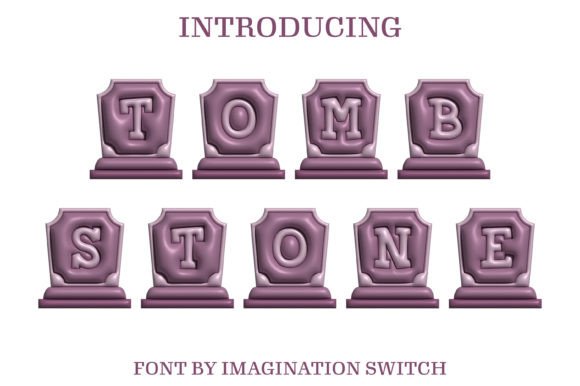
You know that feeling when you're scrolling through endless font libraries, searching for that one typeface that doesn't just sit there but actually performs? That's exactly what Tombstone Inflated does. It's a typographic creation that brings dimension and vitality to each of its characters, using clever color techniques and a striking 3D style to create an illusion of depth. If you've been stuck in the flat-design rut and need something that jumps off the screen—or the page—this might be the creative asset you didn't know you were looking for.
What Makes This Display Font Stand Out
Most fonts do their job quietly. They communicate words. They stay out of the way. Tombstone Inflated, on the other hand, refuses to be invisible. Its inflated letterforms give every character a rounded, puffed-up quality that feels almost tactile—like you could reach out and squeeze each letter. The dimensional shading adds shadows and highlights that trick the eye into seeing depth where there is none, turning flat text into something that feels genuinely three-dimensional.
This isn't just novelty for novelty's sake. The visual weight and personality of this typeface make it a strong candidate for projects where grabbing attention is non-negotiable. Think movie posters, event banners, product packaging on crowded shelves, or a social media feed where everything competes for a two-second glance. Tombstone Inflated doesn't whisper. It announces.
What's particularly useful is how the color application works. Rather than relying on a single solid fill, the font uses gradients and tonal shifts that enhance its inflated appearance. This means you can adapt it to different brand palettes without losing the dimensional effect that makes it special. Whether your brand leans toward bold primaries or muted pastels, the font's structure maintains its character.
Where This Creative Font Actually Works
Let's talk about real projects, because a font is only as good as its application. Tombstone Inflated excels in contexts where you need a headline or display element to carry visual weight without relying on images or illustrations.
Logo design is an obvious starting point. For brands in entertainment, gaming, food and beverage, or youth-oriented markets, this typeface offers instant personality. A craft brewery, a podcast about retro culture, a children's toy line—these are the kinds of brands that could build an entire visual identity around a font like this. It's distinctive enough to be recognizable, which is the whole point of a logotype.
Packaging design is another strong fit. Picture a snack bag on a convenience store shelf. Hundreds of products compete for attention. A bold, inflated typeface on the front panel creates immediate visual hierarchy. The consumer's eye lands on the product name first, then moves to supporting information. That's good packaging typography doing its job.
For social media graphics, Tombstone Inflated solves a common problem: making text-heavy posts actually stop the scroll. Instagram stories, YouTube thumbnails, TikTok overlays, Pinterest pins—these platforms reward bold visual choices. A 3D-style font with real presence can transform a simple announcement into something that feels designed rather than thrown together.
Poster design and event materials are natural homes for this kind of typeface. Music festivals, comedy shows, movie nights, product launches, grand openings—any event where the typography itself needs to generate excitement. The inflated quality adds a playful, energetic vibe that suits celebratory contexts.
Even editorial layouts and blog headers can benefit, though with more restraint. A magazine feature spread about street art, a blog about pop culture, a digital product cover—using Tombstone Inflated for pull quotes or section headers adds visual interest without overwhelming the reading experience.
Matching Typography to Your Project Goals
Here's where practical design thinking matters more than font enthusiasm. Not every project needs a premium font with this much personality. Choosing the right typeface always starts with asking what the text needs to do.
If your goal is brand recognition, a distinctive display font like Tombstone Inflated can become a visual anchor. When customers see that inflated lettering repeatedly across your packaging, website, and marketing assets, they start associating the style with your brand. That's typography working as a branding tool, not just a communication tool.
If readability is your primary concern—and for body copy, it always should be—then this font belongs in your headline layer, not your paragraph text. Pair it with a clean sans serif font or a straightforward serif font for longer passages. The contrast between a playful display typeface and a functional text font is one of the most reliable font pairing strategies in modern typography.
For professional presentation, context matters enormously. Tombstone Inflated works beautifully for a creative agency's pitch deck or a startup's launch campaign. It would feel out of place in a law firm's annual report. That's not a flaw—it's a feature. Every font has an appropriate audience and setting. Understanding that distinction separates good design from chaotic design.
Audience engagement is where this font genuinely shines. People respond to visual novelty. When a typeface looks different from the sea of Helvetica and Open Sans that dominates digital spaces, it creates a moment of recognition. That moment is valuable. It's the difference between content that gets glanced at and content that gets remembered.
Practical Tips for Working with Inflated Letterforms
Before you commit to Tombstone Inflated for a project, test it in context. Drop it into your actual layout, not just a blank canvas. See how it interacts with your color scheme, your imagery, your whitespace. A font that looks stunning in isolation can sometimes clash with the other elements in a real design.
Pay attention to size and scale. Dimensional fonts like this one tend to perform best at larger sizes where the inflated details and shading effects are clearly visible. At small sizes, the nuances can muddy together, reducing legibility. Use it for headlines, titles, and display text. Let a simpler typeface handle the fine print.
Explore the included font styles and weights if the package offers them. Many premium fonts come with variations—regular, bold, outline, shadow—that give you flexibility within a single typeface family. Having access to multiple styles means you can create hierarchy and variety while maintaining visual consistency across a project.
Consider commercial licensing carefully. If you're using this font for client work, merchandise, or products you sell, make sure the license covers your intended use. Most reputable font foundries and marketplaces are transparent about licensing terms, but it's worth double-checking before a font ends up on a thousand printed t-shirts or a widely distributed digital product.
Finally, don't overuse it. A bold display font is like a strong spice—a little goes a long way. If every heading, subheading, and call-to-action button uses Tombstone Inflated, the effect becomes exhausting rather than exciting. Reserve it for the moments where you want maximum impact, and let your supporting typography do the quieter work.
Building a Visual Identity with Character
The fonts you choose say something about your brand before a single word is read. They set expectations, communicate tone, and create emotional associations. Tombstone Inflated communicates confidence, creativity, and a willingness to stand out. For brands and creators who want their visual identity to feel energetic and memorable, it's a typeface worth exploring.
Whether you're designing a logo for a new venture, building social media templates for a content brand, or developing packaging for a product that needs shelf presence, having a distinctive display font in your toolkit changes what's possible. It moves your typography from functional to expressive, from forgettable to recognizable.
The best design decisions aren't about following trends—they're about choosing tools that serve your specific goals. If those goals include grabbing attention, creating visual depth, and building a brand identity that people actually remember, then Tombstone Inflated deserves a spot in your font collection. Test it, pair it thoughtfully, use it strategically, and let its dimensional personality do what it does best: make your words impossible to ignore.